Published On: Jul 07, 2026
|
Call Us (512) 476-2494
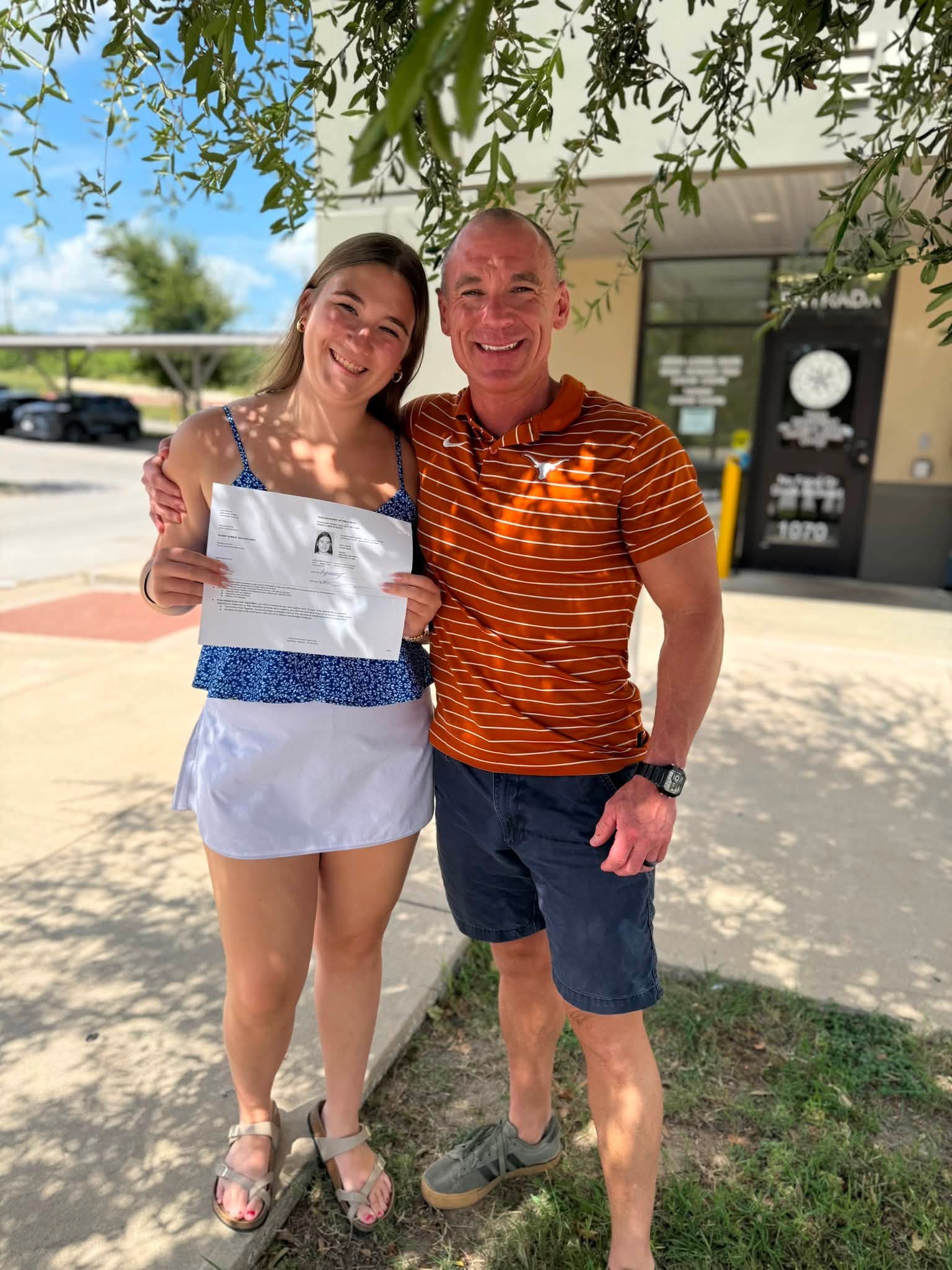
My daughter turned 16 this week. She passed her driver’s license test. I am proud of her. I am also a criminal defense attorney who has spent decades in Texas courtrooms — and that combination puts a very specific lens on this moment.
I have defended clients whose serious legal troubles started with a routine traffic stop. A broken taillight. A rolling stop at a sign. A lane change without a signal. These are everyday mistakes. For new and young drivers, they can quickly become something far more consequential.
Most parents focus on the right things at first — accidents, distracted driving, peer pressure, texting at the wheel. All valid concerns. But there is another risk that almost never comes up in driver’s ed class: a minor traffic violation can turn into a criminal case in minutes. I see the aftermath of this in Central Texas courts more than most people realize. This post is for every parent putting a new driver on the road — and for every young driver who thinks a traffic stop is no big deal.
Texas law gives officers broad authority once a valid traffic stop is made. The officer can observe everything in plain view — no warrant required. That is the plain view doctrine, and it operates the moment you pull over.
Here is where minor stops escalate fast.
Open containers. Texas Penal Code § 49.031 prohibits open alcoholic beverage containers in a motor vehicle. One uncapped bottle visible in the vehicle changes the entire nature of the stop.
Alcohol and minors. Texas Alcoholic Beverage Code § 106.041 is strict. Any detectable amount of alcohol while driving is a DUI for anyone under 21. The legal BAC limit of 0.08 under Texas Penal Code § 49.04 applies to adults. For minors, the limit is zero.
Drug possession. Even small amounts of marijuana trigger Texas Health & Safety Code § 481.121 — possession of marijuana, a Class B misdemeanor at minimum. Officers don’t need to suspect drugs when they pull you over. They only need a valid reason to stop you. What they see or smell after that is fair game — unless your attorney challenges the stop’s validity or any unlawful extension of the detention.
Weapons. A legally licensed handgun must still follow strict storage and display rules under Texas law. Unlicensed weapon possession in a vehicle can trigger felony charges.
In my practice, I have seen this pattern repeat hundreds of times. A young driver gets nervous. They start talking. They answer questions they were never required to answer. They agree to a search they had every right to refuse. Minutes later, they are in handcuffs.
Officers are trained to build rapport quickly. “Where are you coming from?” “Whose car is this?” “Mind if I take a look?” These are not idle conversation. Officers are building probable cause or obtaining consent.
The Fourth Amendment and Article 1, Section 9 of the Texas Constitution protect you from unreasonable searches. A traffic stop does not automatically authorize a search of your vehicle. Officers need your consent, a valid warrant, or an independent legal justification — plain view observation, the odor of drugs, or another recognized exception.
The U.S. Supreme Court confirmed in Rodriguez v. United States (2015) that officers cannot extend a traffic stop beyond its legitimate purpose without reasonable suspicion of additional criminal activity. A stop dragged out while waiting for a K-9 unit — without legal justification — can render discovered evidence suppressible.
Defense attorneys examine every step: Was the stop lawful? Was the detention extended unlawfully? Was consent truly voluntary? These are winning arguments. But they work best when the driver did not give everything away at the scene.
A traffic stop lasts a few minutes. Its consequences can last years.
New drivers are especially vulnerable. They are nervous, eager to cooperate, and often unaware of the rights they have. That combination is exactly what turns a minor traffic citation into a criminal charge.
If your child — or anyone you care about — is facing charges that began with a traffic stop, do not wait. Rights violations and unlawful extensions of detention are real, legitimate legal arguments. Evidence can be challenged. Charges that seem solid can fall apart with the right defense.
At GBA Firm, we represent people across Texas whose serious legal trouble started with something that seemed minor. We know these cases. We know the arguments. And we know how to fight for the best possible outcome. Call (512) 476-2494 or fill out our online contact form to speak with us.